Our main work focusses to the following category:
- Promote sustainable agriculture
- Support marginalized and vulnerable groups (people living with disability and street children)
- Advance community education and capacity building
- Foster environmental conservation and climate action
- Encourage partnerships and innovation
- Promote mental health and social wellbeing
- Empower youth and women
- Build economic resilience
1.5 Geography and Demographic Coverage
Rural Awareness Development Initiatives (RADI) operates in the western region of Kenya, specifically in Kimaeti Sub-County of Bungoma County. The organization’s headquarters is strategically located at Kimaeti Market, approximately 20 kilometers from Bungoma Town, along the Kenya–Uganda border. This semi-urban market also serves as the administrative center of Kimaeti Sub-County, making it a central hub for RADI’s outreach and operations.
RADI initially launched its activities in three key locations within the sub-county: Napara, Kimaeti, and Kibuke. Over time, due to growing community engagement and demand, the organization has expanded its geographic footprint to cover all five locations within Kimaeti Sub-County. These locations are characterized by fertile agricultural land, but also face increasing challenges related to soil degradation, climate change, and land fragmentation due to rising population density.
The region experiences a bimodal rainfall pattern, supporting mixed farming systems including crop production and livestock rearing. However, environmental degradation and unsustainable practices have posed threats to long-term agricultural productivity, thus necessitating RADI’s climate-smart and sustainable interventions.
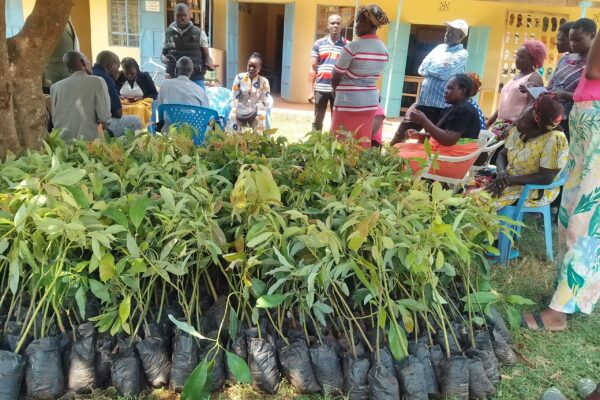
RADI serves a diverse and growing rural population. Its direct beneficiaries include over 400 members from 16 self-help groups, each with an average of 25 members. The demographic profile includes:
- Small-scale farmers—men and women primarily reliant on agriculture for livelihood.
- Youth and young farmers—empowered through agricultural training, business skills, and climate-resilient farming techniques.
- Elderly community members—many of whom hold indigenous knowledge critical to local food systems.
- Marginalized and vulnerable populations—including persons with disabilities, widows, and low-income households.
- Students in agricultural training institutes—supported through knowledge-sharing and field-based learning.
- Women and gender-inclusive groups—advancing gender equality and inclusive rural development.
RADI’s interventions target entire households, creating a ripple effect of impact across generations and empowering communities to build resilience, economic stability, and food security from the ground up.

